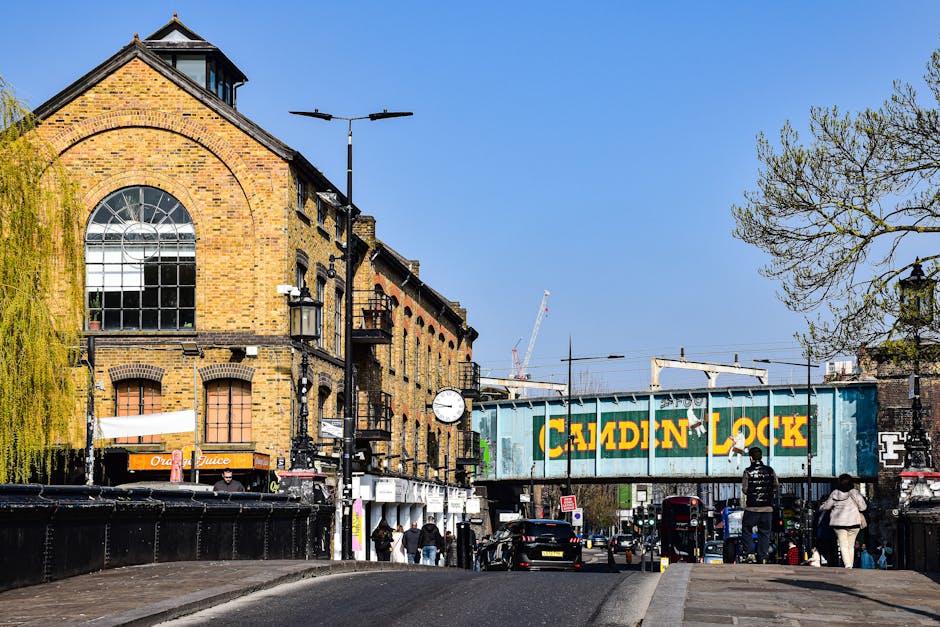
Camden office removals for Kentish Town Road businesses: a practical guide for smooth workplace moves
If you run a business on or near Kentish Town Road, you already know the area has its own rhythm: buses passing, tight loading windows, a mix of older buildings and newer commercial spaces, and not much room for mistakes on moving day. That is exactly why Camden office removals for Kentish Town Road businesses need careful planning, not just a van and a hopeful attitude.
Whether you are moving a compact studio, a shared office, or a growing company that has simply outgrown its current space, the process can be managed cleanly if you break it into sensible stages. This guide explains how office removals work, what tends to go wrong, how to reduce disruption, and which moving services may help, including office relocation services, commercial moves, and packing and unpacking services.
Truth be told, most office moves fail for boring reasons: no inventory, poor timing, fragile items left to the last minute, and a drawer full of cables nobody wants to admit belong to anything. The good news? A proper plan solves most of it.
Expert summary: A successful Camden office move is usually less about brute force and more about sequencing: survey the building, label properly, protect data and equipment, and keep staff informed early. Get those basics right and the rest becomes far easier.
Contents
- Why Camden office removals for Kentish Town Road businesses matters
- How Camden office removals for Kentish Town Road businesses works
- Key benefits and practical advantages
- Who this is for and when it makes sense
- Step-by-step guidance
- Expert tips for better results
- Common mistakes to avoid
- Tools, resources and recommendations
- Law, compliance, standards, or best practice
- Options, methods, or comparison table
- Case study or real-world example
- Practical checklist
- Conclusion
- Frequently asked questions
Why Camden office removals for Kentish Town Road businesses matters
On paper, moving an office is straightforward. In reality, especially around Kentish Town Road, it touches almost every part of a business at once: staff schedules, customer service, equipment, access, storage, safety, and the all-important first day in the new place. If one part slips, you feel it everywhere else. And in a busy part of Camden, the margin for error can be tiny.
For local businesses, the move often has to work around shared entrances, limited parking, stairs, narrow corridors, or buildings that were not designed with modern office equipment in mind. That means desks, monitors, filing cabinets, printers, archive boxes, and IT gear all need a realistic moving plan. If you are relocating a commercial space, it can help to think less like a house move and more like a business continuity exercise.
There is also the human side. Staff are usually juggling handovers, customer emails, phone calls, and the general awkwardness of packing up a working space. Nobody wants a Monday morning where the Wi-Fi is missing, the kettle is boxed by mistake, and the finance files are somewhere under a stack of "miscellaneous."
That is why a structured service matters. It keeps the move calm, protects business assets, and helps you reopen quickly. In some cases, a smaller team using a flexible man with van setup is enough. In others, especially where there are multiple rooms or heavier items, a larger vehicle such as a removal truck hire option may be more efficient.
How Camden office removals for Kentish Town Road businesses works
The exact process depends on the size of the office and how much needs moving, but the structure is usually similar. A good mover will start by understanding what is being moved, where it is going, and what access looks like at both ends. That may sound obvious, but in the real world it is where a lot of stress is removed.
Most office relocation jobs follow a simple flow:
- Initial assessment: You outline the inventory, building access, timing, and any special items such as IT equipment, artwork, or confidential archives.
- Planning: The mover decides what vehicle, crew size, packing materials, and lifting equipment are needed.
- Packing and labelling: Office contents are sorted by department, priority, or room so unpacking is not chaos.
- Protected transport: Items are loaded carefully, secured for transit, and moved without unnecessary delays.
- Delivery and setup: Items are placed in the right rooms, and essentials are positioned so the business can restart quickly.
- Clear-away and tidy-up: Any packaging, redundant items, or unwanted furniture can be removed or scheduled for disposal.
For some companies, the move is almost painless because they have already streamlined their stock, files, and furniture. For others, the day exposes every old habit. That half-broken chair from 2019? Still there. The cable box nobody ever sorted? Still there too.
If your office includes sensitive documents, you may also want to plan confidential disposal separately. A service such as confidential shredding can help reduce the risk of leaving old paperwork in the wrong place at the wrong time.
Key benefits and practical advantages
The real value of a professional office removal is not just transport. It is the reduction in disruption. A thoughtful move lets your business keep functioning while the relocation happens in the background. That is especially useful for businesses on Kentish Town Road, where losing half a day to disorganisation can be more expensive than the move itself.
- Less downtime: The faster your team is resettled, the sooner you are back to work.
- Better protection for equipment: Monitors, printers, laptops, and filing systems are less likely to be damaged when packed properly.
- Cleaner workflow: Room-by-room labelling makes unpacking far more efficient.
- Lower stress for staff: People can focus on their jobs instead of improvising on moving day.
- Safer lifting and handling: Heavy or awkward items are managed with better technique and the right equipment.
- More controlled costs: A clear inventory and realistic plan reduce last-minute changes.
There is another benefit people sometimes overlook: a move is a chance to reset the office. Old furniture, surplus storage, and unused items can be cleared out, which often makes the new place feel lighter and more functional. You notice it immediately when the space opens up and you can actually walk in a straight line. Small pleasure, but a real one.
If you are replacing worn furniture rather than moving it, the team can also support responsible collection through furniture pick up or arrange disposal through relevant removal services where appropriate.
Who this is for and when it makes sense
This kind of move suits a wide range of businesses. You do not need a huge corporate headquarters to benefit from a proper office relocation plan. In fact, small and mid-sized businesses often need it more because they have fewer hands on deck.
Camden office removals for Kentish Town Road businesses make sense for:
- startups moving out of a shared workspace
- small agencies or consultancies changing floors or premises
- retail back offices that need better storage or access
- medical, professional, or administrative offices with sensitive records
- growing teams moving to larger premises
- businesses downsizing and keeping only what they truly use
- companies combining multiple rooms or satellites into one base
Sometimes the move is planned months ahead. Sometimes it comes from a lease ending sooner than expected. Either way, if the office contains more than a few desks and boxes, it is usually worth using a dedicated moving plan rather than treating it like a quick furniture shuffle.
Some businesses also choose a broader man and van service for smaller relocations, especially when the office is compact and access is straightforward. That can be a practical middle ground when you do not need a full-scale relocation crew.
Step-by-step guidance
Below is a practical way to approach the move without letting it take over your week. Nothing fancy. Just a simple sequence that works.
1) Make a room-by-room inventory
List every item that is moving, staying, being recycled, or being disposed of. Be specific. "Office stuff" is not an inventory. "Three desks, two pedestal drawers, five monitors, one network printer, eight archive boxes" is much better. You will feel the difference later when you are unpacking at 4 p.m. and trying to remember which box holds the keyboard.
2) Confirm the access at both properties
Check lift availability, stair widths, loading points, parking options, and whether there are any time restrictions. Older Camden buildings often have charming features, and by charming we mean tight corners and doors that seem to have opinions of their own. Knowing access early helps the moving team plan properly.
3) Protect IT and confidential material
Back up data, disconnect devices in a controlled way, and separate any confidential paperwork. If documents need to be destroyed, arrange that before or during the move rather than leaving them in a box "for later." Later is how office clutter survives another five years.
4) Decide what is worth moving
Not everything should go. Damaged chairs, obsolete filing units, and broken appliances can slow down the move. This is a good moment to use services such as mattress and sofa disposal for unsuitable bulky items, or to review sustainability-minded options through recycling and sustainability.
5) Pack by function, not by chance
Keep items from the same department together where possible. Use clear labels, colour coding, or a simple numbering system. Put urgent items into a separate "first day" box: kettle, charger, extension lead, scissors, tape, basic stationery, keys, and any working documents you cannot lose. Honestly, that one box can save you a lot of grief.
6) Set a move-day order
Decide what leaves first, what stays until the end, and what needs immediate placement at the new office. When a move is structured around priority, the team can start work sooner and the room does not become a jumble of half-open boxes.
7) Reopen with a short checklist
Once the office is delivered, check essentials first: power, internet, phones, access, and key furniture. Then deal with the rest. If you are using packing and unpacking services, this stage becomes much smoother because the items are already grouped in a useful way.
Expert tips for better results
A few small choices can make a surprisingly big difference. The move itself is only one day; the planning before it is where most of the value sits.
- Move in phases if possible. If the office is busy, shift non-essential items first and keep operational equipment back until the end.
- Keep key staff involved. One person should own inventory decisions, but department leads should confirm what they need. Otherwise, something important will go missing. Usually the one thing everyone assumed someone else had packed.
- Use simple labels. "Accounts", "Reception", "Meeting room", "IT" is better than cryptic shorthand only two people understand.
- Take photos before dismantling. Back of cabinets, cable routes, wall-mounted items, screen setups. Future-you will be grateful.
- Think about the first hour at the new office. If you can make tea, connect devices, and find the Wi-Fi details quickly, morale stays much better.
- Ask about insurance and handling standards. You want reassurance that your items are handled carefully and transported in line with good practice. A provider's insurance and safety approach matters more than flashy promises.
It also helps to choose the right scale of service. Not every move needs a massive vehicle. For some office relocations, a flexible moving truck or smaller van arrangement is more sensible because parking and access are easier to manage. Sometimes the smartest solution is the one that looks simplest.
Common mistakes to avoid
Office removals are full of avoidable headaches. Most of them come from underestimating how much coordination is required, especially in busy London streets.
- Leaving packing to the last day. It always takes longer than people think. Always.
- Not measuring furniture. Desks and cabinets that fit the old office may not fit the new one.
- Forgetting parking and access. A great plan can unravel fast if the vehicle cannot get near the building.
- Mixing departments together. This creates delays, confusion, and more unpacking time.
- Ignoring obsolete items. Moving unwanted furniture wastes space and money.
- Not planning around business hours. Even a short disruption can be costly if customers or staff need access.
- Assuming everything is covered automatically. Check what the moving provider is responsible for and what you need to prepare.
One of the biggest mistakes is emotional, really. People keep things because they might be useful "one day." Office moves are a chance to ask the sensible question: do we genuinely need this? If the answer is no, let it go. Your new office will feel better for it.
Tools, resources and recommendations
You do not need elaborate project software to manage a move, though bigger teams may prefer it. Often the best tools are the simplest ones.
- Inventory spreadsheet: Keep track of each item, its department, and its final destination.
- Coloured labels or tape: Useful for quickly identifying rooms and priority items.
- Box numbering system: Helps you check that all boxes arrived.
- Basic dismantling tools: Screwdrivers, Allen keys, zip bags for fixings, and a marker pen.
- Cleaning supplies: Cloths, wipes, bin bags, and tape for final tidying.
- Secure document bags or boxes: Helpful for paper records and sensitive paperwork.
For businesses with surplus furniture or bulky items, it may also help to plan disposal alongside the move rather than afterwards. Relevant services include moving truck support for the relocation itself and furniture pick up for unwanted items that are still usable or suitable for collection.
If you are trying to understand pricing before you commit, a page like pricing and quotes is the natural place to start. It helps you compare options properly instead of guessing, which to be fair is how a lot of office moves go wrong in the first place.
Law, compliance, standards, or best practice
Office removals are not usually complicated from a legal point of view, but they do touch on areas where caution matters. In the UK, businesses have duties around health and safety, data handling, waste disposal, and responsible management of staff and premises. The exact obligations vary by business type, but the general principle is simple: don't take shortcuts where people, documents, or hazardous items are involved.
Best practice for a business move usually includes:
- safe manual handling for heavy or awkward items
- secure treatment of confidential papers and devices
- proper disposal of anything that cannot be reused
- clear communication with staff before move day
- checking insurance and liability arrangements in advance
- making sure the building access arrangements are understood by everyone involved
If your office has electrical items, fragile equipment, or anything unusual, tell the mover early. If you have items that are broken, contaminated, or otherwise unsuitable for ordinary transport, they should be treated separately. For environmentally responsible disposal, you can review options through recycling and sustainability or, where appropriate, services such as hazardous waste disposal.
And if you need reassurance about operational standards, it is worth reading a provider's health and safety policy and about us information before booking. That kind of clarity is boring in the best possible way.
Options, methods, or comparison table
Different office moves need different approaches. Here is a simple comparison to help you think clearly.
| Option | Best for | Strengths | Watch-outs |
|---|---|---|---|
| Small van-based move | Compact offices, light loads, short distances | Flexible, quick, often cost-effective | May need multiple trips for larger loads |
| Dedicated office relocation service | Full office moves, sensitive equipment, structured handover | Better planning, smoother coordination, less disruption | Requires more preparation and timing |
| Truck hire with self-managed labour | Businesses with their own staff available | Control over packing and loading | More strain on staff, higher risk of delays |
| Hybrid approach | Moves with a mix of furniture, files, and general goods | Balanced cost and support | Needs clear role allocation to avoid confusion |
For a lot of Kentish Town Road businesses, the hybrid approach works best. It is flexible enough for smaller offices, but still gives you professional handling where it matters. If you need a vehicle as part of that setup, removal truck hire may suit more substantial loads, while smaller offices may be fine with a lighter service.
Case study or real-world example
Here is a realistic example of how this often plays out. A small professional office near Kentish Town Road needs to move from one floor to another, then into a nearby commercial unit a few streets away. The team has six desks, two storage cabinets, a printer, a few filing boxes, and several laptop stations. Nothing huge, but enough to create chaos if handled casually.
The company first separates what must move from what can be recycled or discarded. A couple of outdated chairs and a redundant shelving unit are taken out of the plan early. Files are boxed by function, not by whoever packed them last. IT equipment is labelled and stored in a single group. One person handles keys and access details. Another keeps an eye on the "first day" essentials box. Simple, but effective.
On move day, the crew loads the priority items first, then the rest of the furniture, then the archive boxes. The new office is set up in working order before the afternoon ends. There is still a bit of unpacking left, of course. There always is. But the business is live again, which is the point.
That kind of move rarely feels dramatic. And that is the good sign. The best office relocations are often the ones that feel oddly uneventful once they are done.
Practical checklist
Use this checklist to keep the move organised and low-stress.
- Confirm the move date and preferred access times
- Prepare a full inventory of furniture, files, and equipment
- Identify items to keep, move, recycle, or dispose of
- Back up data and secure IT equipment
- Arrange confidential shredding for sensitive papers if needed
- Measure desks, cabinets, and larger items against the new space
- Check parking, lift access, stairs, and loading restrictions
- Label boxes by department and destination room
- Create a first-day essentials box
- Review insurance and safety details before booking
- Decide whether you need packing support or a full relocation service
- Plan for post-move disposal of any remaining unwanted items
If you are unsure which service level fits your move, start with the basics and build from there. It is better to over-plan slightly than to discover you have nowhere to put the printer at 8:30 in the morning.
Get a free quote today and see how much you can save.
Conclusion
Camden office removals for Kentish Town Road businesses work best when they are treated as a practical project rather than a last-minute lift-and-shift. A clear plan, sensible packing, proper access checks, and the right support can make a busy London move feel manageable, even if the office is full of awkward furniture and half-forgotten admin.
The real goal is not just to move items from A to B. It is to protect time, reduce stress, and help your business reopen in a way that feels calm and organised. That is the difference people notice. The difference they remember, too.
If you take one thing from this guide, let it be this: plan early, label clearly, and only move what genuinely deserves space in the new office. The rest can be cleared, recycled, or handled another way. Clean start, better headspace.
Frequently Asked Questions
How far in advance should I book Camden office removals for a Kentish Town Road business?
As early as you reasonably can. A bigger office or a move involving awkward access, IT equipment, or several departments benefits from more lead time. Even smaller moves are easier when you book ahead, because you can plan packing and access without rushing.
Can office removals be done outside normal working hours?
Often, yes. Many businesses prefer early mornings, evenings, or weekends to reduce downtime. The best time depends on building access, staff availability, and any local restrictions you need to work around.
What should I do with confidential files before the move?
Separate them early and decide whether they are staying, being archived, or destroyed. If destruction is needed, arrange secure handling rather than putting sensitive documents into ordinary boxes.
Do I need to pack everything myself?
Not necessarily. Some businesses pack their own lighter items and ask for help with larger furniture or fragile equipment. Others prefer full support. It usually comes down to time, staff capacity, and how much disruption you can tolerate.
What type of moving service suits a small office best?
For a compact office, a smaller van-based move or flexible man and van service can work well, especially if access is straightforward and the load is modest. For larger or more structured relocations, a dedicated office relocation service is usually more efficient.
How do I reduce downtime during an office move?
Move in phases where possible, label everything clearly, prepare a first-day essentials box, and make sure key people know their responsibilities. The smoother the planning, the faster you can get back to normal work.
What happens to old furniture we do not want to move?
It can often be collected, reused, or disposed of depending on condition and suitability. If items are beyond use, explore responsible disposal rather than leaving them to become a problem in the new space.
Are there safety issues with moving office furniture myself?
Yes, especially with heavy cabinets, awkward desks, or narrow stairwells. Manual handling injuries are a real risk, so it is wise to use proper lifting methods and get help for anything bulky or unstable.
How do I keep IT equipment safe during the move?
Back up data, disconnect devices carefully, label cables, and pack hardware so it is not rattling around loose. If equipment is sensitive or expensive, tell the mover in advance so it can be handled with extra care.
Can I combine office removals with furniture disposal?
Yes, and that is often the smartest approach. Moving only what you truly need keeps the new office lighter and easier to set up. Services such as furniture collection, recycling support, or disposal options can be part of the wider plan.
How do I know if I need a truck rather than a small van?
It depends on volume, weight, and access. If you have multiple workstations, several cabinets, or lots of boxed material, a larger vehicle may be the cleaner option. For smaller loads, a lighter setup is often enough.
What should I ask a removal provider before booking?
Ask about access planning, packing support, insurance and safety, timing, vehicle size, and how they handle fragile or confidential items. A good provider should give clear, practical answers without making the process sound more complicated than it needs to be.
Moving an office can feel like a lot, especially in a busy part of Camden, but it does not have to be messy. With a little structure and the right support, the day can go from stressful to surprisingly smooth. And that is a good feeling, frankly, when the last box is down and the kettle is finally plugged in.